Atul Aneja
Building momentum following national elections this year, Myanmar is focusing on a grand connectivity project that will link it with the key ASEAN countries along a land corridor.
The new trade route will by-pass the Strait of Malacca–a key maritime chokepoint that connects the Indian and Pacific oceans.
After the Hormuz crisis, the search for new routes that can by-pass established chokepoints including Malacca has intensified.
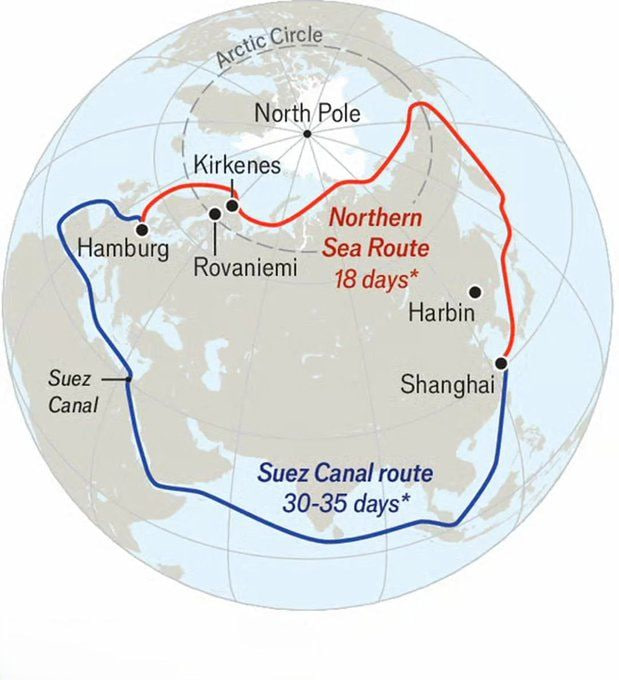
For instance, there has been fresh interest to develop the Northern Sea Route which heads from the North Pacific northwards to the Arctic Ocean. It then heads west to the North Atlantic in order to access Europe. This is possible because melting ice in the Arctic zone allows ships to travel in ice-free waters for a few months in a year.
Geography has endowed Myanmar the capacity to carve out new corridors that bypass the Malacca straits.
Already, China has developed Kyaukphyu, a deep water port that allows Chinese oil and gas shipments to offload. From Kyaukphyu oil energy is transited through a twin energy pipeline towards Kunming, the capital of China’s Yunnan province.
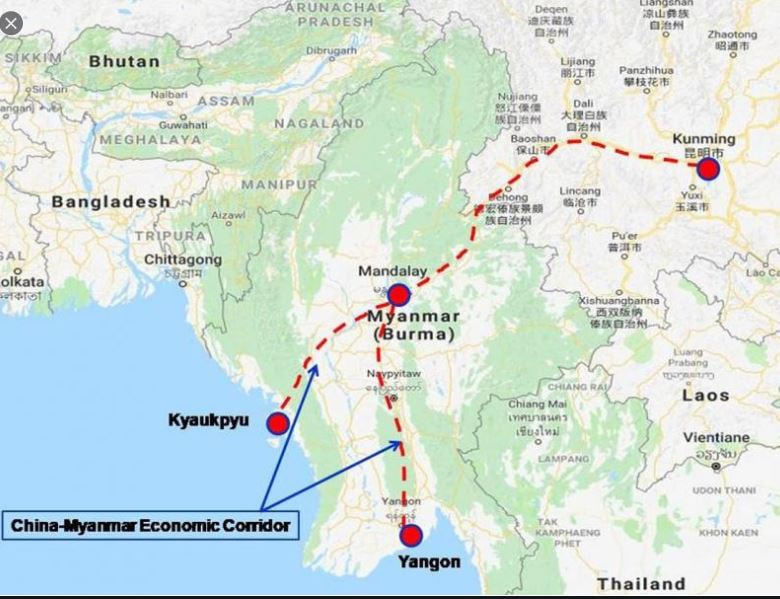
The under construction China Myanmar Economic Corridor also envisages a railway that will link Kyaukphyu with Kunming via the Mandalay, a hub in the center of Myanmar, through which multiple trade routes can transit in the future.
Beyond Kyaukphyu, the main pivot of the new trade route is Dawei, where a Special Economic Zone (SEZ) is planned. It is also an initiative where Russia comes in strongly, opening the door for Moscow’s deeper engagement with the 10-nation Association of South East Asian Nations (ASEAN).
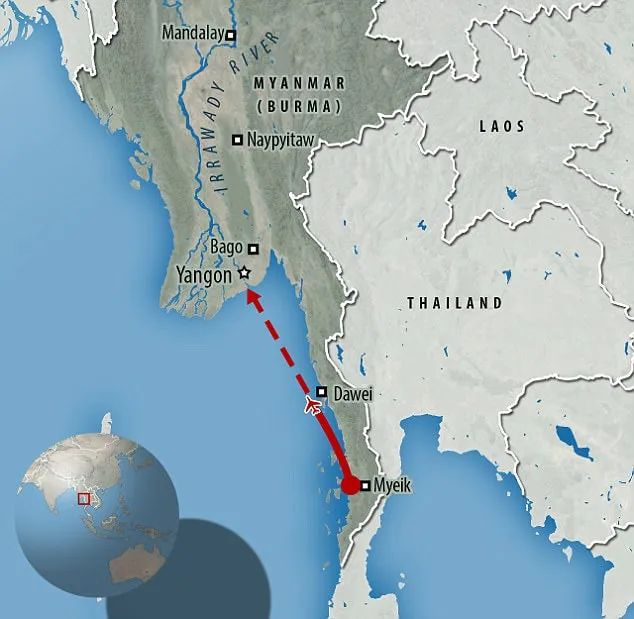
More specifically, the Dawei SEZ is located at Myanmar’s Tanintharyi province, hosting a deep water port, the country’s largest. Positioned at the Andaman coast, the original project aimed to turn a 196 sq. km zone in Yebyu Township into Southeast Asia’s largest industrial and trade zone.
The Dawei SEZ will host heavy industries including steel, petrochemicals and cement apart from light industries including garments and food processing. A 400–600 MW power plant is proposed at the SEZ.
Serving as the Malacca‑bypass land bridge from the Indian Ocean to the South China Sea.
The Dawei SEZ It is part of the Greater Mekong Subregion’s Southern Economic Corridor (SEC), a planned Andaman Sea gateway threading Myanmar with Thailand, Cambodia and Vietnam into a single east–west industrial chain.
When completed, the Dawei SEZ will pass through Phu Nam Ron on the Thai border–a distance of 138–145 km, passing through a terrain comprising coastal plains, forested hills and the Thai border ridge.
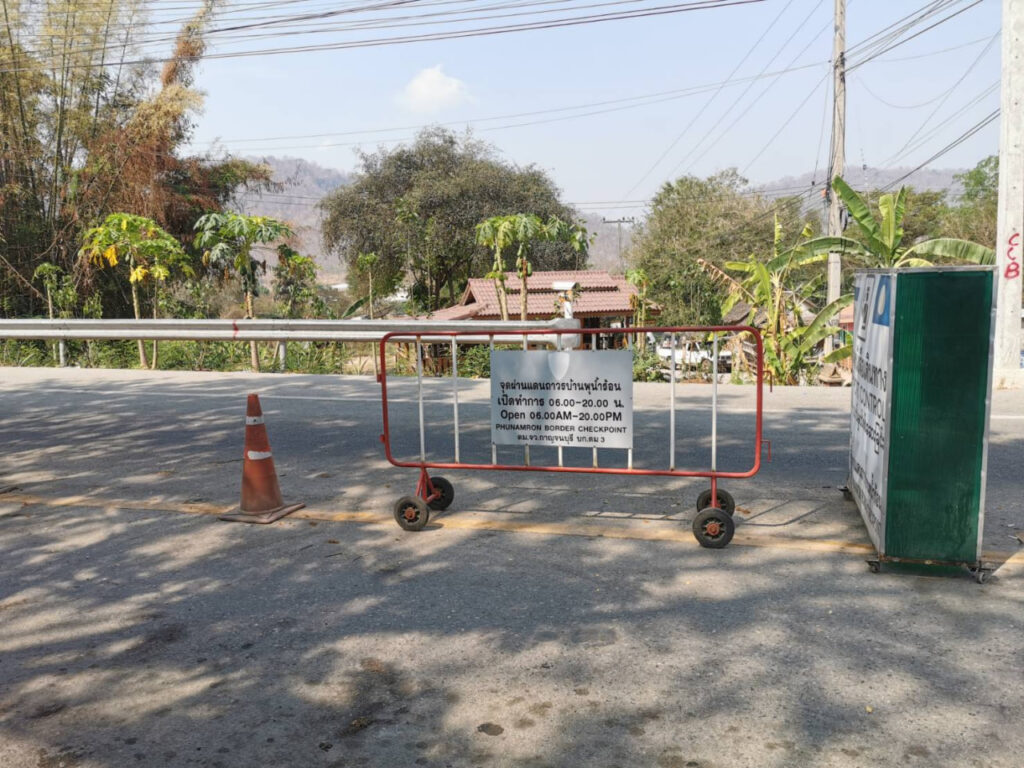
In the future, a 4‑lane highway is planned but construction of a future rail corridor, power plants and an LNG terminal is also on the drawing board. The corridor will eventually function to provide Indian Ocean access for Thailand, Cambodia and Vietnam.
Inside Thai territory, the corridor segment will head from Phu Nam Ron to Kanchanaburi to Bangkok. In other words the SEZ trail will connect Dawei directly to Thailand’s industrial belt, linkup with the Eastern Economic Corridor (EEC) covering Chonburi, Rayong and Chachoengsao belt which is critical for automotive, electronics and petrochemical industry.
Bangkok, in turn also becomes the fulcrum from where an eastern arm heading Cambodia and Vietnam via Aranyaprathet, Poipet, Phnom Penh, Bavet, Moc Bai and Ho Chi Minh City. This is part of the fully functional Greater Mekong Subregion (GMS) corridor known for its high-density manufacturing chains that include textiles, electronics, assembly and exports.
Given the heavy throughput, Dawei can provide strategic access to the Bay of Bengal, Arabian Sea, Red Sea and Europe.
Following the 2021 military takeover of Myanmar, much of the Dawei project, which had Thailand and Italy as partners stalled. Consequently, the Dawei–Htee Khee–Phu Nam Ron Highway has only been partially built and upgrades hit a roadblock.
Also the Dawei, Bangkok rail spur was pushed to the backburner.
With the termination of the Italian‑Thai Development (ITD) concession, Myanmar authorities have sought support from Russia.
Consequently, Russian companies are now majorly involved in the Daewei development. Moscow’s initiative includes designing of q 600 MW power plant. Russia is also planning an oil refinery, and has proposed setting up a LNG terminal.
Besides, deep‑water port development plans are also under discussion.
In fact, in June 2026, Myanmar and Russia signed an MoU to build a power plant for the Dawei deep‑sea port and special economic zone project in southern Myanmar.
The agreement was clinched during Myanmar Vice President Nyo Saw’s visit to Russia, with Moscow‑based energy company Inter RAO partnering Myanmar’s Launglon Economic Development Company Limited.
At the Russia–Myanmar Business Forum held in Moscow on August 18, Russian Economic Development Minister Maxim Reshetnikov stated that Russian companies aim to secure majority shares in the Dawei port and SEZ project.
In other words, Russia is now the primary external driver of the Dawei SEZ revival, providing energy infrastructure, refinery planning, port development negotiations, financing conditions, and political backing.
Following the successful 2026 elections in Myanmar, Thailand too is making a comeback in the Daewee project.
Thailand’s pragmatic Prime Minister Anutin Charnvirakul has turned to proactive engagement with Myanmar, driven by the necessity of strategic diversification. As a result, the need for a shorter route to the Indian Ocean and diversification away from the Malacca chokepoint, has driven Bangkok to re-engage with Naypyitaw.
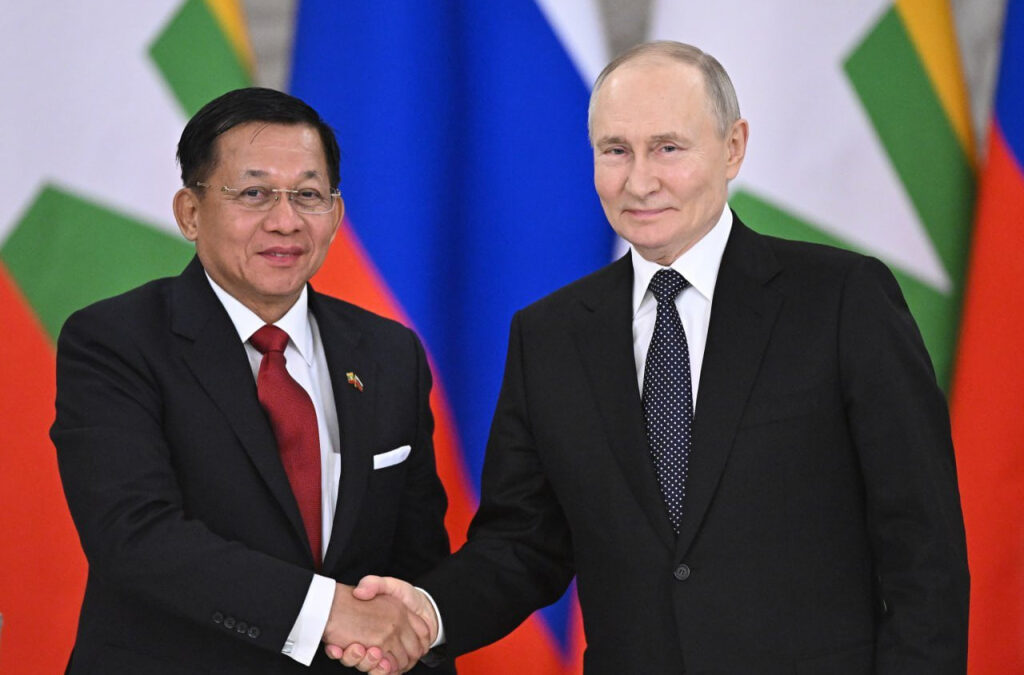
Thailand made its intent to revive ties with Myanmar when it rolled out the red carpet for President Min Aung Hlaing, during his visit to Bangkok in August 2026.
During the visit, both sides agreed to cooperate on road links, maritime connectivity, port development and cross‑border logistics.
In fact, Prime Minister Anutin declared that Thailand and Myanmar were “ready for a new chapter in economic cooperation.”
There was also an explicit mention of Dawei as a priority for trade expansion, energy cooperation, and industrial connectivity.
The pledges included support for the Dawei-Phu Nam Ron road upgrades as well a re-valuation of port and SEZ investment frameworks. Besides, the conversation included integration of Dawei into Thailand’s EEC logistics chain. Discussions were also re-opened regarding rail connectivity.
Some of the drivers for Daewei include the need for fast access to India, West Asia and Africa. Besides, fresh urgency has been imparted to alternative routes that by-pass Malacca in the backdrop of the Hormuz crisis. Currently, Thailand mainly depends on Laem Chabang, from where exiting ships have to pass through Malacca.
Myanmar’s reinforced focus on Daewei is part of a bigger shift in its strategic outlook, where engagement with the emerging economies–China, Russia and India–and key ASEAN neighbours especially Thailand, Cambodia and Vietnam is being prioritised. Daewei development is therefore part of a broader structural shift that includes development of ports and related infrastructure and linking them up with land-based connectivity initiatives.
Russia, with deeper Dawei engagements, gets another foothold into the ASEAN region. It also opens the door for Myanmar to join the broader direction of Eurasia via China which is part of the Eurasian legacy transport infrastructure including the Manchurian railway and Russia, via the trans-Siberian railway.